Man Eating Udon Vector Pack 01: A Designer's Real-World Embroidery Review
I have spent years reviewing machine embroidery design assets, and I can tell you that the difference between a great file and a frustrating one often comes down to how well it translates from a digital screen to a needle and thread. Today, I am looking at the Man Eating Udon Vector Pack 01. At first glance, this falls under the broad category of Illustrations and Graphics, but as someone who actually stitches these files into finished products for clients, I need to know more than just what the image looks like on a monitor.
This review is not about marketing fluff. It is about practical judgment. If you are an Etsy seller, a boutique owner, or a crafter looking to add a unique touch to your handmade shop product line, you need to understand how the Man Eating Udon Vector Pack 01 behaves in the real world. Does it hold up after washing? Is it too detailed for a small cap? Let's dive into how this design performs when we move it from the computer to the hoop.
The First Impression: Mood and Visual Personality
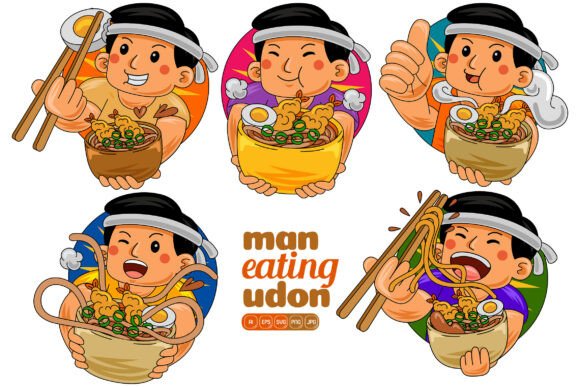
When I first opened the Man Eating Udon Vector Pack 01, the immediate feeling was one of playful whimsy. The theme is inherently fun, capturing a moment of culinary joy that resonates with foodies and casual diners alike. Unlike stiff corporate logos, this design has a relaxed, approachable personality. It feels like something you would see on a trendy apron in a hipster coffee shop or a tote bag at a local farmers market.
The shape and layout suggest versatility. Because the source is described as vector-based, the lines appear crisp and clean. This is crucial for embroidery files because clean vector lines usually translate to better stitch paths. However, the "illustration" aspect means there is likely a level of detail that requires careful consideration. In my experience, designs that rely heavily on fine lines can get lost if the stitch density is too high or if the fabric texture is too coarse. For a project like a kitchen towel or a baby onesie, this mood fits perfectly, offering a sense of warmth and humor that customers love.
Real-Life Application: From Digital File to Finished Product
Let me walk you through a specific scenario where I would use the Man Eating Udon Vector Pack 01. Imagine you are preparing for a holiday gift season or launching a new line of custom apparel for a small business. You decide to create a set of embroidered tote bags featuring this design. The concept is simple: a cute character enjoying a bowl of noodles, perhaps with a speech bubble or a subtle background element.
In this context, the design shines. Tote bags provide a large, flat canvas, which allows the full illustration to breathe. When stitched onto a sturdy cotton canvas, the Man Eating Udon Vector Pack 01 would likely look professional and eye-catching. The ability to change colors easily is a massive plus here. You could offer variations in pastel threads for a spring collection or bold, saturated colors for a summer festival vibe. This flexibility is exactly what makes a design valuable for commercial embroidery projects where customization is key.
Similarly, I see this working well on sweatshirt embroidery. The soft fleece of a hoodie provides a nice backdrop for the fill stitches, making the image pop without looking harsh. For a personalized gift, such as a baby item or a nursery decor piece, the theme is innocent and charming. Parents often appreciate designs that tell a story or evoke a smile, and a happy noodle eater does exactly that. However, if you plan to sell these items on platforms like Etsy, the visual appeal must be consistent. The design needs to look good in both black and white mockups and in full color, ensuring your branding remains strong across different mediums.
Where Caution is Required: Fabric and Placement Challenges
While the Man Eating Udon Vector Pack 01 has potential, no design is perfect for every situation. As an experienced reviewer, I must point out where this design might struggle. One of the primary concerns with illustration-style graphics is the balance between detail and durability.
If you attempt to stitch this design on a small hoop size, such as for a baseball cap or a hat, you risk losing the finer details. Curved surfaces like caps distort the stitch pattern, and intricate corners of an illustration can become muddy or jagged. If the design includes tiny lettering or delicate outlines, they may disappear entirely once stitched onto a curved surface. In these cases, the finished product might look amateurish rather than professional.
Fabric choice is another critical factor. Textured fabrics, like heavy denim or bouclé wool, can hide the nuances of the design. Similarly, thin or stretchy fabrics require extra care. Without proper stabilizer support, the tension of the machine can cause the fabric to pucker, distorting the shape of the man and the bowl. Dark fabrics also present a challenge; if the design relies on light-colored outlines or highlights, they may not show up clearly against a black background unless you use a high-density underlay or a contrasting thread color strategy.
Furthermore, if the design is intended for products that need frequent washing, such as aprons or tea towels, the stability of the stitches becomes paramount. Dense stitch areas can sometimes trap lint or soil, making cleaning difficult. For decorative accents or items that are rarely washed, like pillow covers or wall hangings, this is less of a concern, but it is still worth noting for long-term customer satisfaction.
Practical Notes for the Embroidery Designer
Before you commit to using the Man Eating Udon Vector Pack 01 in a client project or a batch of handmade goods, there are several steps you should take. First and foremost, always test the design on scrap fabric. This is non-negotiable. Run a sample stitch-out to check the thread colors and ensure the contrast works as expected. Pay close attention to the stitch density; if the fill stitches are too thick, the fabric might bunch up, ruining the aesthetic.
You should also confirm the hoop size requirements. While the description mentions the ability to resize, resizing a complex illustration can sometimes alter the proportion of the stitches, leading to gaps or overlaps. Check whether the design works for both personal and commercial projects by reviewing the licensing terms provided by the creator. Do not assume that a purchase allows for unlimited commercial resale without verifying the specific license agreement.
Another important step is to inspect small details. Zoom in on the vector file to see if there are any tiny elements that might not translate well to thread. If the design includes very fine lines, consider simplifying them or increasing the spacing between stitches during digitizing if you have control over that process. Finally, compare light and dark fabric backgrounds to ensure the design retains its visual impact regardless of the base material.
Final Verdict on Design Value and Trust
The Man Eating Udon Vector Pack 01 offers a fresh, engaging option for designers looking to expand their portfolio of design assets. Its strength lies in its versatility and the emotional connection it creates with the viewer. When executed correctly, it elevates a standard handmade product into something memorable and shareable.
For Etsy sellers and small shop owners, this design can be a great addition to your catalog, particularly for food-themed merchandise or gifts. However, success depends on your technical execution. By respecting the limitations of the medium—choosing the right fabric, using adequate stabilizer, and testing thoroughly—you can ensure that the embroidery project delivers the quality your customers expect. Remember, the goal is not just to stitch an image, but to create a lasting piece of art that brings joy to the recipient. With careful planning, the Man Eating Udon Vector Pack 01 can definitely deliver on that promise.